When I first started reading, I surfed the internet to get some idea about the most talked-about books in the reader’s community. Of course, for a sports fan like me, a book with a Nike swoosh on its cover was an instant attraction.
If you had the chance to ask my 12-year-old self what his favorite sports brand was, he’d say ‘Nike’ in a blink of an eye. Years later, the answer to that question remains the same.
In today’s day and age, Nike is more than just a brand, it is an identity. With its popularity among the sneaker community, it’s safe to say that the swoosh symbol has become the face of the sneaker industry.
Ever wonder what the road to building such a popular brand looks like?
Phil Knight’s memoir ‘Shoe Dog’ narrates the story behind the creation and the growth of the biggest sports brand in the world. From start to finish, this book paints a picture of what life and entrepreneurship are all about.
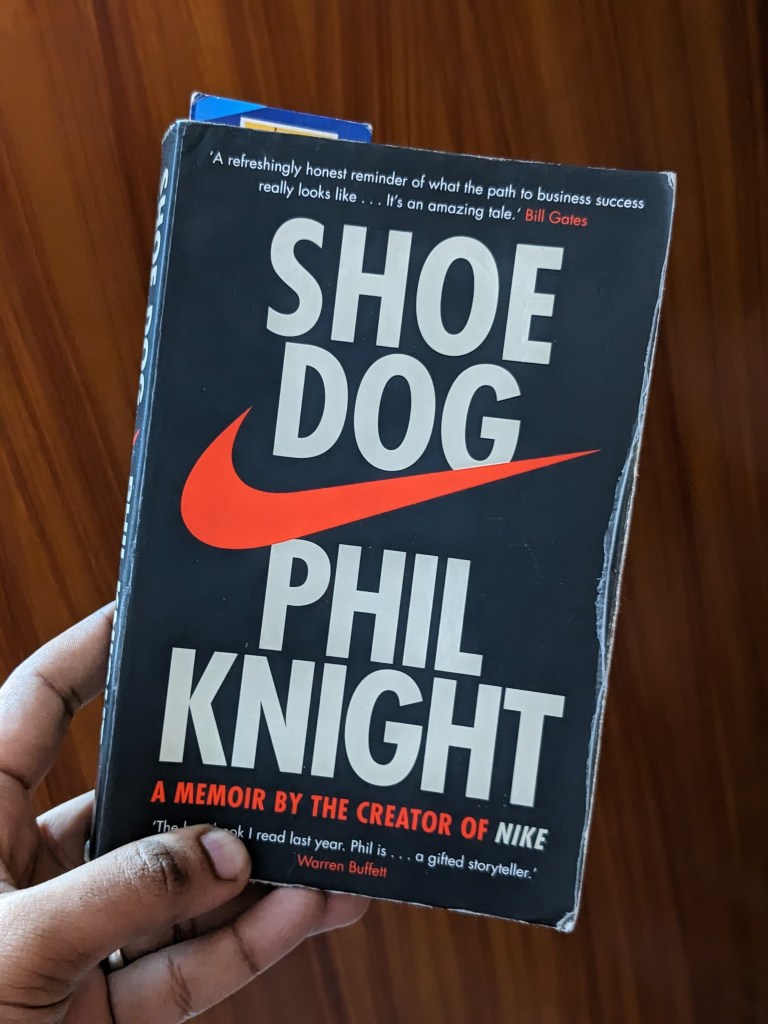
Though heralded by many as a business classic, the memoir is also a package of incredible life lessons.
I picked up this book because of my love for the brand and my curiosity about Phil Knight the businessman. But as I continued reading it, I fell in love with Phil Knight the storyteller.
I was truly fascinated by his incredible gift of storytelling and his unique perspective on business.
The beginning of the journey
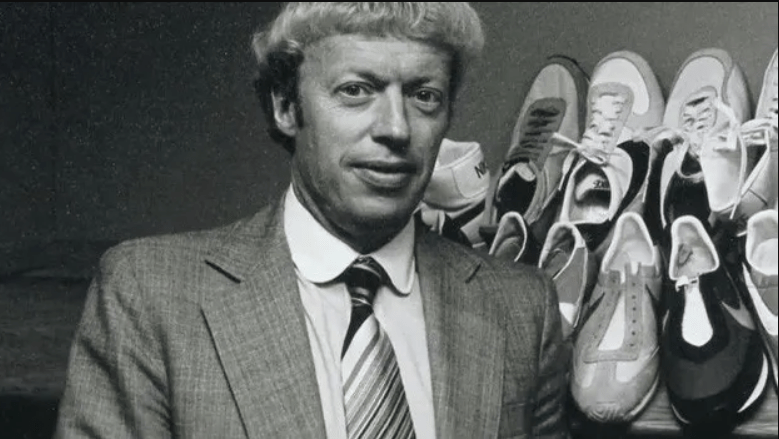
Reminiscing his journey from being a college student from Portland to being a world-renowned businessman, Phil depicts his story year by year, starting from 1962, the year he decided to share his business idea with his father.
During one of the everyday father-son conversations about life, he reminds him about the research paper he wrote during one of his final classes at Stanford.
The paper talked about the way Japanese cameras burst onto the camera business and scaled the top by outshining the Germans, and how Phil felt the same could happen with Japanese shoes.
Being a runner himself, Phil knew a thing or two about shoes. Throughout the book, you can see him describing the minutiae of everyday life from a shoemaker’s perspective, making the book all the more interesting.
In 1962, Phil had two important things on his bucket list, both of which needed his father’s approval. One, travel to Japan; approach a shoe company, and pitch them his business idea. Two, as a part of this journey, he also wanted to take a tour around some of the world’s most renowned cities.
Before leaving a mark on this world, he wanted to see, learn and experience our vast cultural differences. He’d always had this trip at the back of his mind. The business trip to Japan was the perfect time to execute it.
The Birth of Blue Ribbon
Phil somehow found a way to convince his father to not only approve his idea but also lend him some money to go forth. The next step now was to make Carter, his former Stanford classmate, accompany him on his world tour.
It was a Yes from Carter too. And thus the journey began. Stop one – Honolulu, Hawaii. Carter and Phil spent some time there doing whatever kept their boats afloat.
The next stop was the city of Tokyo. This time, it was only Phil. Carter found himself a girlfriend in Hawaii and didn’t want to leave her behind. So on Thanksgiving day 1962, Phil left for Japan.
After spending some time in Tokyo, he left for Kobe to meet the representatives of a company called Onitsuka Tiger. When he arrived at the factory, he was greeted by Ken Miyazaki, who gave him a tour of the whole place.

Knight explained his vision of importing quality Japanese shoes into the US market by taking them through his college research paper. Mid-conversation, Knight was questioned about his company’s name, which caught him off guard, as it was something he had never thought of before.
With a myriad of emotions running through his veins, Knight uttered ‘Blue Ribbon’. Believe it or not, that’s how Nike’s predecessor was born.

“Gentlemen, I represent Blue Ribbon Sports of Portland, Oregon,” said Mr. Miyazaki, with a smile on his face, cherishing a company that didn’t even exist. Introducing the Onitsuka Tigers into the US market was a highly profitable venture, and they all were well aware.
They all shook hands at the end, and the deal was made. The non-existent ‘Blue Ribbon’ was now the distributor of Onitsuka Tigers in the US.
Knight wrote to his dad immediately, asking him to wire the company 50 dollars to place the first order.
A few months had gone by before the first order reached Phil’s hands. Filled with the excitement of having 12 pairs of high-quality Japanese shoes in front of him, the first thing he did was send a couple of pairs to Mr. Bowerman, his track coach at Oregon.
Bowerman had a huge impact on Knight’s life. His obsession with creating different styles of effective lightweight running shoes for his students changed Knights’ perspective on footwear forever. Throughout the book, you can see how Phil shows his admiration for Bowerman and his incredible creativity with shoes.

Phil Knight pictured with Bill Bowerman
Impressed by the quality of the shoes, Bowerman expressed his desire to partner up with his former student on his business venture. The duo agreed on a 51-49 split giving better ownership of Blue Ribbon to Phil. They both invested 500 dollars each and ordered their first big shipment.
Phil began selling his first pair of shoes from the trunk of his car. After realizing that shoe stores weren’t ready to welcome his idea, he decided to visit different track meets in his locality and sold his shoes there.
Who would’ve thought that such a simple beginning would one day go on to revolutionize the footwear industry?
In 1963, his first year of business, Knight grossed $8,000 in sales. Those numbers didn’t come easy. Knight’s struggles with steady cash flow, a problem that went on for many more years in his business life, always kept him on the brink of losing it all.
The transformation from Blue Ribbon to Nike
One of the biggest strengths of Blue Ribbon was how each of its employees fit well into their roles. Bob Woodell, Johnson, John Bark, and Geoff Hollister were some of the early employees of the company.
Together, they went through every through an extremely topsy-turvy ride to help the company grow every year.
Blue Ribbons’ order of business was simple- take a loan from a bank/creditor, place an order at Onitsuka, sell the shoes, and repeat.
The Americans had no idea about Japanese shoes before Blue Ribbon’s arrival. But now, the love for these shoes was spreading like a forest fire.
In the year 1966, they opened their first retail outlet in Santa Monica. Over the years they established outlets in different parts of the country, expanding their boundaries across the board.
As their sales numbers got better and better, their reputation at Onitsuka got better too, leading to longer contracts and total control over distribution in the country.
In 1971, Phil wanted to go beyond Onitsuka shoes and searched for their replacement. He wanted to import soccer shoes from a factory in Mexico and sell them as football shoes in the US.
When the crew had to come up with a name for these shoes, it was Johnson who came up with the name ‘Nike’, which refers to the Greek Goddess of victory.
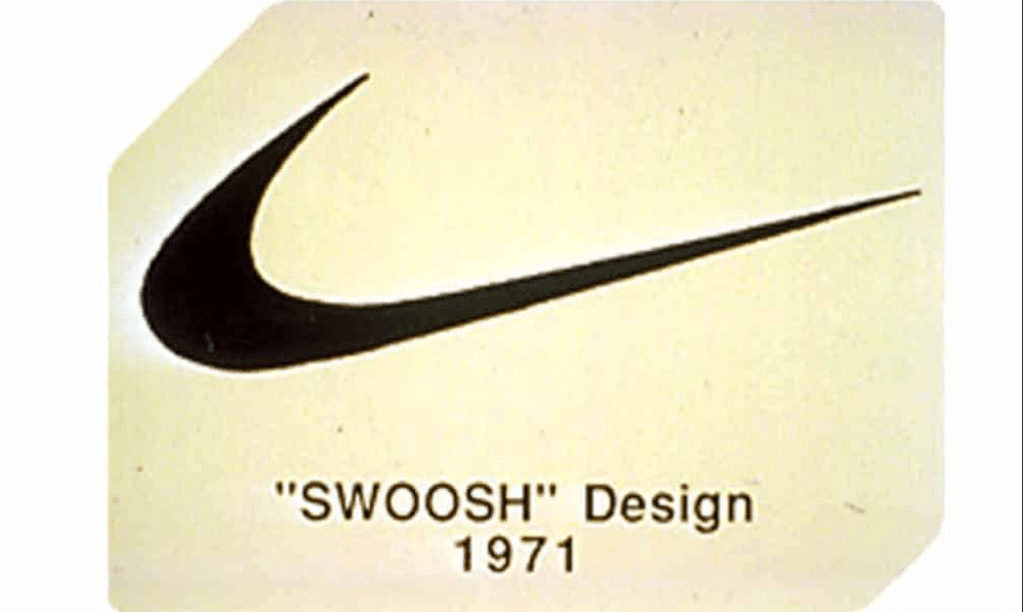
To design the logo for Nike, Phil hired Carolyn Davidson, a young artist from Portland. After surfing through some of her designs, the crew settled on the swoosh symbol to be the face of Nike.
Today, that swoosh has become one of the most recognizable symbols in the world. All thanks to a college kid who was paid 35 dollars to work on it.
Even though the sales numbers got better each year, the trials and tribulations never ceased.
They went through everything from almost being locked up by the FBI to owing the government millions of dollars. The most important thing about the crew was that they never gave up.
They kept fighting, innovating, and outshining their competitors, and building Nike into what it is today. Nike’s influence grew stronger every year as they went on to sign some of the most well-known athletes in the world like Michael Jordan, Tiger Woods, Kobe Bryant, and so on.
The company started by selling $8,000 in its first year in 1963. Today, their annual sales are reported to be in the vicinity of $30 billion dollars.
Phil’s memoir takes us through the extreme highs and lows of his entrepreneurship journey showing us with each chapter that passion, hard work, and persistence can help us scale through unimaginable heights.
Some of my key takeaways from the memoir:
- Knight’s desire to take risks at a young age
Knight’s entire life story is built on his ability to take high risks with little or no hesitation. You can read about it on various occasions in this book.
From taking a world tour in an age where not many people preferred traveling on air to distributing Onitsuka Tigers without even establishing a company, Knight never backed down from risks.
He was very clear about what he wanted to achieve and was willing to face any hurdle that might stand in his way. It goes without saying that entrepreneurship comes with a lot of unknown risks of its own.
But reading Knight describe the financial, mental, and physical stress it puts you through, showed me a much clearer picture of what it’s really like.
It was such an inspiring experience to read how he overcame each struggle. I’m sure it would motivate you to take on tougher challenges in life.
2. Knight’s love and passion for shoes
I’ve noticed this trait in almost every person that has achieved incredible success in their life. They all love what they do for a living. Phil Knight was no different.
You can see it in how he describes the first shoe factory he visited. He terms the sound of machines molding the shoes as a cobbler’s concerto.
You won’t hear that from someone who wasn’t a shoe dog, i.e.: a person who has devoted themself to the making, selling, buying, or designing of shoes. Having visited some of the world’s most exotic cities, Knight still describes his shoes with more enthusiasm.
While reading him talk about his love for shoes, I questioned myself if I love my profession the same way. The answer was a clear No. Not even close! But it encourages me to pursue it even further. We can see it in Knight’s life too.
We can read about all the jobs he had done before this, and how unsatisfied he felt. Then when he found his true passion, he went all in. True love even makes takings risks a little easier.
3. Knight’s competitive spirit
During the early years of Nike, the world of shoe-making was unequivocally dominated by Adidas. It was the reason why Phil always wanted to outdo them.
It’s very evident from the memoir that Phil was an extremely competitive guy. But trying to compete against the best company in the world when your company has just begun to take baby steps may sound insane.
But that competitive fire pushes us to go to extreme levels of commitment and effort just so we can do better than our competition. Phil is the best example of that statement.
For example, when Frank Rudy approached Nike with the air sole idea, the members of the company weren’t amazed by it. They were a bit too skeptical.
But when Phil found out that the idea was pitched to Adidas and they had felt the same way, he was ready to take the risk. He immediately tried on the air sole and went for a test run. After a few discussions, Phil agreed to partner up with Rudy’s idea.
The air sole idea went on to become a revolutionary concept in the footwear industry as it paved the way for the creation of Air Jordan -a business partnership that took Nike to unthinkable heights.
It all started with Phil’s competitive spirit which led him to grab on to the opportunity missed by his competitor.

 Wordsbykenaniah