Introduction
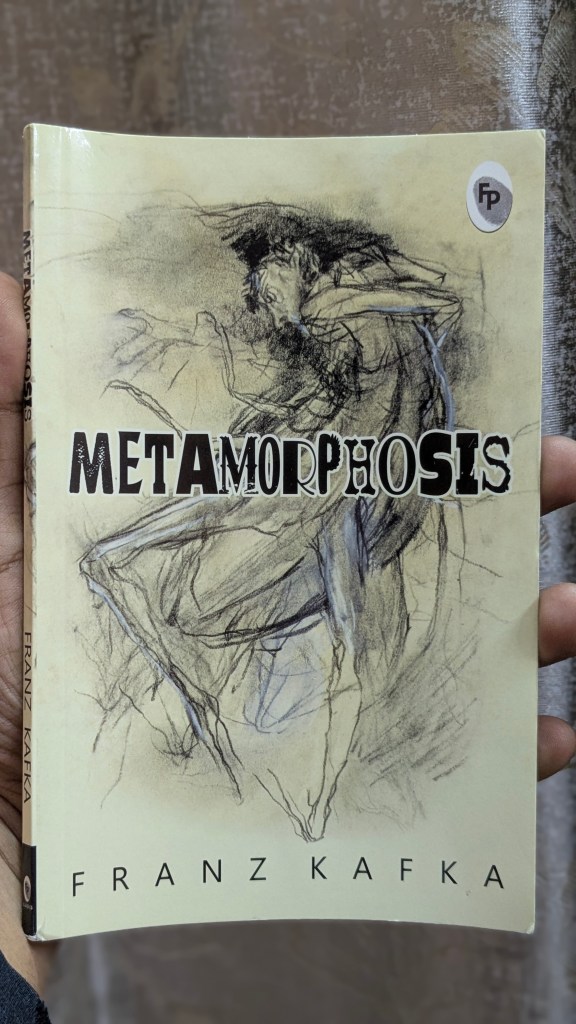
I had encountered the term ‘Kafkaesque’ a few times on the internet. Curious to find out what it was about, I did some research on the works of Franz Kafka and decided to buy his famous novel, ‘Metamorphosis’. Being a non-fiction enthusiast, I’m always a bit sceptical before picking up a fiction book, though I don’t even read them that often, and this time it wasn’t any different. The internet describes the term ‘Kafkaesque’ as extremely unpleasant, frightening, and confusing. Would this style of writing suit someone who isn’t used to the world of fiction? I guess that’s where the creative prowess of an author lies. In this post, I would like to talk about my experience reading this novel and understand the perspective of other readers, too.
Short Summary
The story revolves around the life of Gregor Samsa, a travelling salesman whose life is turned upside down when he is diagnosed with a disorder that turns him into an insect-like creature. This change causes him a lot of physical and mental distress and leaves his whole family in turmoil.
On the day of his disastrous change, he was scheduled to travel for a sales pitch but had dozed off for a long time. Knowing his absence at the workplace, his chief clerk pays a visit to his house and all his problems begin to unravel.
Not willing to reveal his misery yet, Gregor refuses to leave his room for a long time, but after continuous requests from his family and a long rant from his chief, he decides to unlock the door. This moment turns out to be the turning point in Gregor’s new life, as he has his entire family shaken.
Gregor is now focused on convincing his chief that there is nothing abnormal about him and that he can still finish his duty, but is soon chased off and locked into his room by his father. From this point on, Gregor’s life is bound between the walls of his room and hidden in the darkness underneath the furniture.
Far from his normal life, Gregor can no longer be independent, and no longer have freedom or happiness. His parents were now older, and his condition made it all the more difficult for them to comprehend, and it was always his sister who would help him with some of his day-to-day activities.
With every passing day, Gregor’s situation seemed to get worse. His family members could no longer depend on him financially and now had to go to work themselves, and soon his sister’s tight schedule made Gregor feel neglected and alone.
The family took in three lodgers to generate some additional income. One day, as his sister Grete is playing the violin for the lodgers, Gregor shows up in front of them to admire Grete’s performance. The lodgers were shocked by his appearance and decided to leave the house instantly.
Fuming angrily, Grete lashes out at Gregor, and the situation turns ugly. He creeps back to his room in sadness. Sadly, the next morning, the chairwoman of the house finds Gregor lying dead in his room and informs the family. Surprisingly, there wasn’t any grief, just a sigh of relief. After Gregor’s death, the family moves to a new apartment, and they start looking for a husband for Grete.
My Thoughts
I feel that this book is a metaphorical representation of alienation and isolation that occur due to the overwhelming burdens of life, something that is often overlooked, especially with today’s all-hustle, no-rest work culture.
Although Gregor’s metamorphosis seems practically impossible, some of his day-to-day struggles felt relatable. That’s where a lot of credit is due for the writer. Making the audience feel emotions through a humanly impossible story and holding their curiosity to a point where they can’t wait to find out how the character deals with his life is no easy task.
Gregor Samsa’s life is a roller coaster. On one hand, the life-changing disease couldn’t stop him from the worries of financial burdens and family responsibility, on the other, there are times when he doesn’t want to leave his room for a second, hiding behind the darkness had become his routine.
Although it might feel like the metamorphosis is the reason for his alienation, it’s just a revelation to himself on how his life had been. Round-the-clock work schedules had taken hold of his life and had kept him isolated from real human connections, but the disease had put his misery under a microscope.
I can only imagine how often I’ve committed myself to a task, but the leftovers from my day job kept hanging on to a piece of my mind. I can truly relate to being stuck in my routines and always being too busy to indulge in meaningful conversations with the ones around, and also being in a state sometimes where I hated to leave my room, only because I had been accustomed to the isolation.
I can imagine all the times I’ve been sick or on a weekend trip and still have a to-do list lingering in my mind. I feel Franz Kafka might have gone through something similar. I wonder how much he related to Gregor himself.
Interesting perspectives. All arising from a man who turned into vermin!
Overall, I enjoyed reading this work of Kafka, and I’m highly intrigued to explore some of his other works. If you’ve never read this book before, I would recommend you to give it a shot.
Having said all this, I want to interact with some of my readers through this post. I want to know your perspectives on this book and what it meant to you. Share your thoughts in the comments section below. Thank you for reading.

 Wordsbykenaniah