Hi, this is Kenaniah Santhosh Raj, the author of this blog. I'm an engineer, writer, and a self-help enthusiast. If you would like to read my poems and short stories, follow me on Instagram @words_by_ken.
You’ll find a million suggestions and courses online if you want to research productivity and maximize your time. Having spent a lot of time on these topics, I would like to share one of the topics that I found very intriguing – The deep work Hypothesis
The deep work Hypothesis states that to produce results at an elite level, we need to master the art of deep work. Deep work is committing 100% of our focus to the task at hand by eliminating distractions from our environment.
Cal Newport’s teaches us the underlying philosophy and science behind the concept of deep work. He also gives us some great examples of people who have benefited from
The idea of deepwork unlockes a whole new dimension in the world of professional success.What does deep work mean? you may ask. In this post I would be sharing the core idea of deep work and the various elements that it has. This post is to give you an insight on Cal Newport’s book titles ‘Deep work’.
Let’s get right into it.
Deep work is the ability to focus without distraction on a cognitively demanding task. It is the art of nurturing our focus levels to a point where we cam maximise the time that we are spending on a task.
Deep work is specifically focused on helping people get better at their crafts and improve the quality of work that they produce, which in turn adds meaning and depth to a person’s life(you will read more on that second part later in this post)
In my experience, this book was truly an eye opener for me. It opened up so many revelations about my professional life that I hadn’t even thought of before. Its common sense that focus and concentration are two very important things that we need to lead a successful life. But if you would like to dive ocean deep into the world of intense focus, I would highly recommend you read this book as soon as possible.
While we leran about deep work, its also important for us to understand its opposite, i.e: shallow work.
Shallow work refers to the work that can be done without having the need to focus intensely, its something that can be performed while distracted or simultaneously with another task. These are typically the tasks which arent’t hard to do. Following the same approach for tasks that might demand a lot more would end up with poor quality of work.
Let’s talk more about why we would need to implement deep work in our lives:
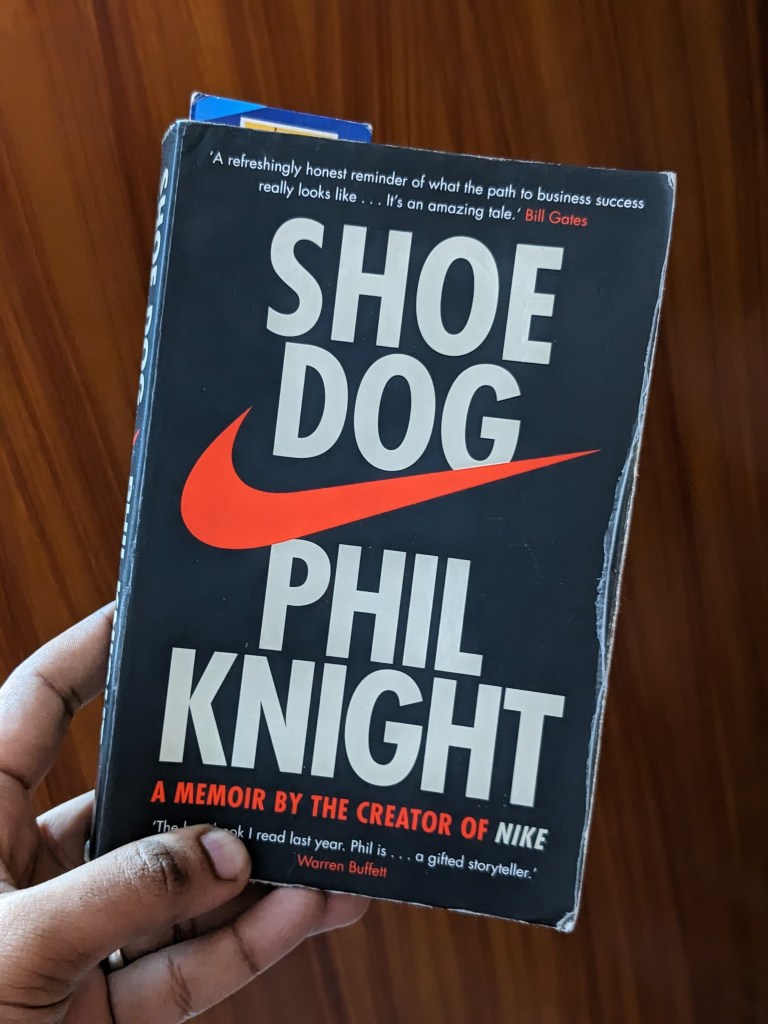
When I first started reading, I surfed the internet to get some idea about the most talked-about books in the reader’s community. Of course, for a sports fan like me, a book with a Nike swoosh on its cover was an instant attraction.
If you had the chance to ask my 12-year-old self what his favorite sports brand was, he’d say ‘Nike’ in a blink of an eye. Years later, the answer to that question remains the same.
In today’s day and age, Nike is more than just a brand, it is an identity. With its popularity among the sneaker community, it’s safe to say that the swoosh symbol has become the face of the sneaker industry.
Ever wonder what the road to building such a popular brand looks like?
Phil Knight’s memoir ‘Shoe Dog’ narrates the story behind the creation and the growth of the biggest sports brand in the world. From start to finish, this book paints a picture of what life and entrepreneurship are all about.
Though heralded by many as a business classic, the memoir is also a package of incredible life lessons.
I picked up this book because of my love for the brand and my curiosity about Phil Knight the businessman. But as I continued reading it, I fell in love with Phil Knight the storyteller.
I was truly fascinated by his incredible gift of storytelling and his unique perspective on business.
The beginning of the journey
Reminiscing his journey from being a college student from Portland to being a world-renowned businessman, Phil depicts his story year by year, starting from 1962, the year he decided to share his business idea with his father.
During one of the everyday father-son conversations about life, he reminds him about the research paper he wrote during one of his final classes at Stanford.
The paper talked about the way Japanese cameras burst onto the camera business and scaled the top by outshining the Germans, and how Phil felt the same could happen with Japanese shoes.
Being a runner himself, Phil knew a thing or two about shoes. Throughout the book, you can see him describing the minutiae of everyday life from a shoemaker’s perspective, making the book all the more interesting.
In 1962, Phil had two important things on his bucket list, both of which needed his father’s approval. One, travel to Japan; approach a shoe company, and pitch them his business idea. Two, as a part of this journey, he also wanted to take a tour around some of the world’s most renowned cities.
Before leaving a mark on this world, he wanted to see, learn and experience our vast cultural differences. He’d always had this trip at the back of his mind. The business trip to Japan was the perfect time to execute it.
The Birth of Blue Ribbon
Phil somehow found a way to convince his father to not only approve his idea but also lend him some money to go forth. The next step now was to make Carter, his former Stanford classmate, accompany him on his world tour.
It was a Yes from Carter too. And thus the journey began. Stop one – Honolulu, Hawaii. Carter and Phil spent some time there doing whatever kept their boats afloat.
The next stop was the city of Tokyo. This time, it was only Phil. Carter found himself a girlfriend in Hawaii and didn’t want to leave her behind. So on Thanksgiving day 1962, Phil left for Japan.
After spending some time in Tokyo, he left for Kobe to meet the representatives of a company called Onitsuka Tiger. When he arrived at the factory, he was greeted by Ken Miyazaki, who gave him a tour of the whole place.
Knight explained his vision of importing quality Japanese shoes into the US market by taking them through his college research paper. Mid-conversation, Knight was questioned about his company’s name, which caught him off guard, as it was something he had never thought of before.
With a myriad of emotions running through his veins, Knight uttered ‘Blue Ribbon’. Believe it or not, that’s how Nike’s predecessor was born.
“Gentlemen, I represent Blue Ribbon Sports of Portland, Oregon,” said Mr. Miyazaki, with a smile on his face, cherishing a company that didn’t even exist. Introducing the Onitsuka Tigers into the US market was a highly profitable venture, and they all were well aware.
They all shook hands at the end, and the deal was made. The non-existent ‘Blue Ribbon’ was now the distributor of Onitsuka Tigers in the US.
Knight wrote to his dad immediately, asking him to wire the company 50 dollars to place the first order.
A few months had gone by before the first order reached Phil’s hands. Filled with the excitement of having 12 pairs of high-quality Japanese shoes in front of him, the first thing he did was send a couple of pairs to Mr. Bowerman, his track coach at Oregon.
Bowerman had a huge impact on Knight’s life. His obsession with creating different styles of effective lightweight running shoes for his students changed Knights’ perspective on footwear forever. Throughout the book, you can see how Phil shows his admiration for Bowerman and his incredible creativity with shoes.
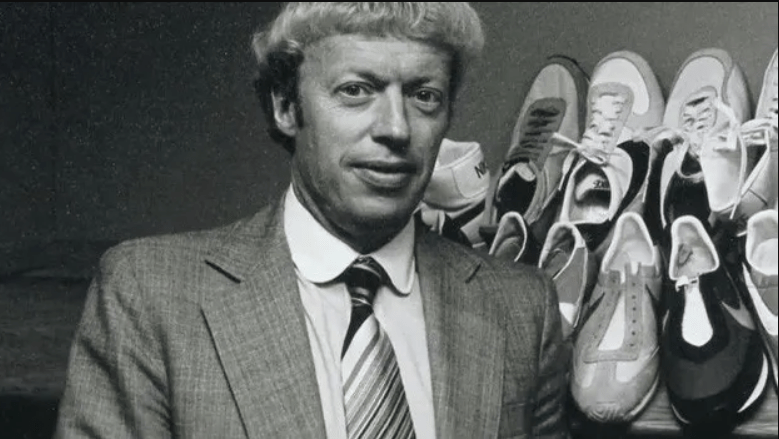
Phil Knight pictured with Bill Bowerman
Impressed by the quality of the shoes, Bowerman expressed his desire to partner up with his former student on his business venture. The duo agreed on a 51-49 split giving better ownership of Blue Ribbon to Phil. They both invested 500 dollars each and ordered their first big shipment.
Phil began selling his first pair of shoes from the trunk of his car. After realizing that shoe stores weren’t ready to welcome his idea, he decided to visit different track meets in his locality and sold his shoes there.
Who would’ve thought that such a simple beginning would one day go on to revolutionize the footwear industry?
In 1963, his first year of business, Knight grossed $8,000 in sales. Those numbers didn’t come easy. Knight’s struggles with steady cash flow, a problem that went on for many more years in his business life, always kept him on the brink of losing it all.
The transformation from Blue Ribbon to Nike
One of the biggest strengths of Blue Ribbon was how each of its employees fit well into their roles. Bob Woodell, Johnson, John Bark, and Geoff Hollister were some of the early employees of the company.
Together, they went through every through an extremely topsy-turvy ride to help the company grow every year.
Blue Ribbons’ order of business was simple- take a loan from a bank/creditor, place an order at Onitsuka, sell the shoes, and repeat.
The Americans had no idea about Japanese shoes before Blue Ribbon’s arrival. But now, the love for these shoes was spreading like a forest fire.
In the year 1966, they opened their first retail outlet in Santa Monica. Over the years they established outlets in different parts of the country, expanding their boundaries across the board.
As their sales numbers got better and better, their reputation at Onitsuka got better too, leading to longer contracts and total control over distribution in the country.
In 1971, Phil wanted to go beyond Onitsuka shoes and searched for their replacement. He wanted to import soccer shoes from a factory in Mexico and sell them as football shoes in the US.
When the crew had to come up with a name for these shoes, it was Johnson who came up with the name ‘Nike’, which refers to the Greek Goddess of victory.
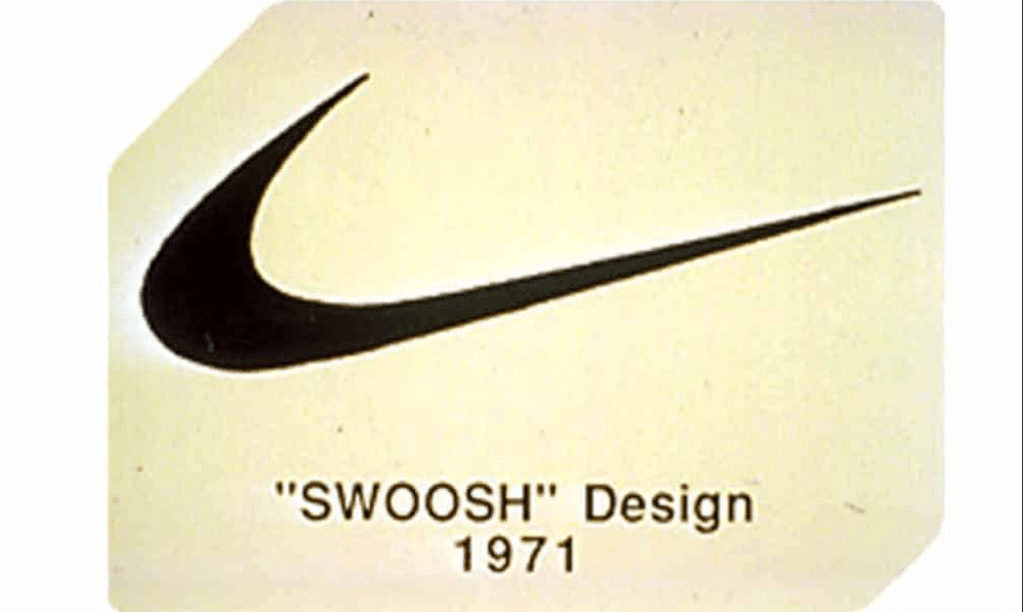
To design the logo for Nike, Phil hired Carolyn Davidson, a young artist from Portland. After surfing through some of her designs, the crew settled on the swoosh symbol to be the face of Nike.
Today, that swoosh has become one of the most recognizable symbols in the world. All thanks to a college kid who was paid 35 dollars to work on it.
Even though the sales numbers got better each year, the trials and tribulations never ceased.
They went through everything from almost being locked up by the FBI to owing the government millions of dollars. The most important thing about the crew was that they never gave up.
They kept fighting, innovating, and outshining their competitors, and building Nike into what it is today. Nike’s influence grew stronger every year as they went on to sign some of the most well-known athletes in the world like Michael Jordan, Tiger Woods, Kobe Bryant, and so on.
The company started by selling $8,000 in its first year in 1963. Today, their annual sales are reported to be in the vicinity of $30 billion dollars.
Phil’s memoir takes us through the extreme highs and lows of his entrepreneurship journey showing us with each chapter that passion, hard work, and persistence can help us scale through unimaginable heights.
Some of my key takeaways from the memoir:
Knight’s desire to take risks at a young age
Knight’s entire life story is built on his ability to take high risks with little or no hesitation. You can read about it on various occasions in this book.
From taking a world tour in an age where not many people preferred traveling on air to distributing Onitsuka Tigers without even establishing a company, Knight never backed down from risks.
He was very clear about what he wanted to achieve and was willing to face any hurdle that might stand in his way. It goes without saying that entrepreneurship comes with a lot of unknown risks of its own.
But reading Knight describe the financial, mental, and physical stress it puts you through, showed me a much clearer picture of what it’s really like.
It was such an inspiring experience to read how he overcame each struggle. I’m sure it would motivate you to take on tougher challenges in life.
2. Knight’s love and passion for shoes
I’ve noticed this trait in almost every person that has achieved incredible success in their life. They all love what they do for a living. Phil Knight was no different.
You can see it in how he describes the first shoe factory he visited. He terms the sound of machines molding the shoes as a cobbler’s concerto.
You won’t hear that from someone who wasn’t a shoe dog, i.e.: a person who has devoted themself to the making, selling, buying, or designing of shoes. Having visited some of the world’s most exotic cities, Knight still describes his shoes with more enthusiasm.
While reading him talk about his love for shoes, I questioned myself if I love my profession the same way. The answer was a clear No. Not even close! But it encourages me to pursue it even further. We can see it in Knight’s life too.
We can read about all the jobs he had done before this, and how unsatisfied he felt. Then when he found his true passion, he went all in. True love even makes takings risks a little easier.
3. Knight’s competitive spirit
During the early years of Nike, the world of shoe-making was unequivocally dominated by Adidas. It was the reason why Phil always wanted to outdo them.
It’s very evident from the memoir that Phil was an extremely competitive guy. But trying to compete against the best company in the world when your company has just begun to take baby steps may sound insane.
But that competitive fire pushes us to go to extreme levels of commitment and effort just so we can do better than our competition. Phil is the best example of that statement.
For example, when Frank Rudy approached Nike with the air sole idea, the members of the company weren’t amazed by it. They were a bit too skeptical.
But when Phil found out that the idea was pitched to Adidas and they had felt the same way, he was ready to take the risk. He immediately tried on the air sole and went for a test run. After a few discussions, Phil agreed to partner up with Rudy’s idea.
The air sole idea went on to become a revolutionary concept in the footwear industry as it paved the way for the creation of Air Jordan -a business partnership that took Nike to unthinkable heights.
It all started with Phil’s competitive spirit which led him to grab on to the opportunity missed by his competitor.
I strongly believe that Youtube is the best learning platform available on the internet. With free access to a wide variety of content creators from across the globe, we get to learn about all walks of life under the same umbrella.
With a platform like youtube, it’s just a matter of knowing what kind of channels to follow. As you know, my blog is always about self-help topics — from books to famous personalities, things I learn about them from interviews, and so on.
So here are some of my favorite youtube channels to follow.
1) ValueTainment
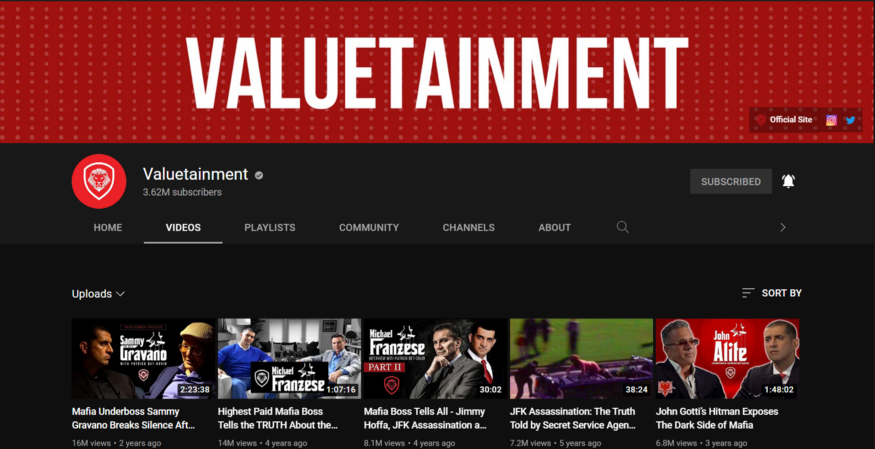
Valuetainment is a youtube channel run by an Ex-veteran entrepreneur Patrick Bet David. In this channel, he talks about various things like entrepreneurship, financial knowledge, self-improvement, etc.
Not only this, but he also posts interviews with successful world leaders, athletes, writers, philosophers, and so on. My favorite part about the channel has to be these interviews.
The reason I love these interviews is that we get to see a side of these people that we normally can’t see elsewhere.
Patrick has the ability to connect with the interviewee on a personal level and make them feel as comfortable as they can. His skill as an interviewer is one of the biggest strengths of the channel.
Another thing I love about his content is his attention to detail. You could see the effort behind each one of his videos. It’s not just about the content he provides, but the delivery, the presentation, the real-life examples, and many more.
He is also an avid reader and posts a lot about his favorite books and gives a lot of great insights into them. So if you are someone who likes to watch videos that would help you grow as an entrepreneur, a leader, or as a person, Valuetainment is a great channel to follow.
Here are some of my favorite videos from Valuetainment :
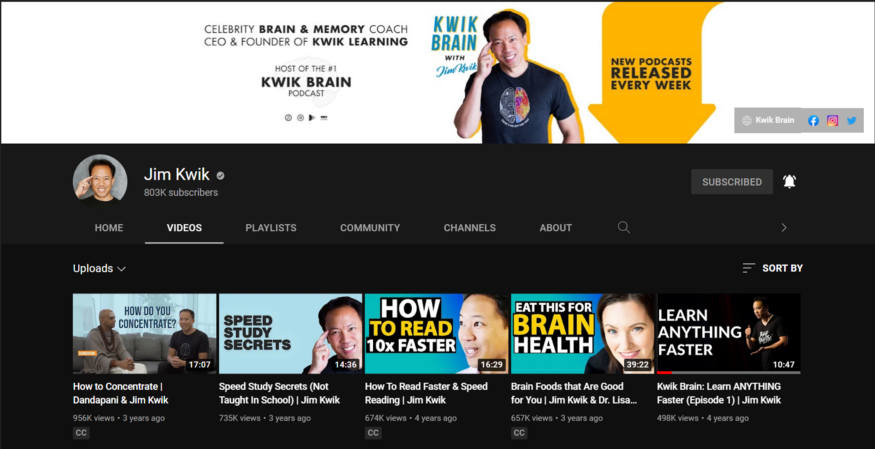
Jim Kwik is a mental coach and an expert in speed reading, memory improvement, brain performance, and accelerated learning. His content is all about improving our brain performance.
If you want to improve your brain health, increase your memory power, read more efficiently, increase productivity and do so much more by understanding the science behind it, this is the perfect channel for you.
Living in a world that is bombarded with data every minute, it is hard for us to focus on some things in particular and remember them.
I’ve always had trouble with remembering the things I read and focusing on one thing at a time. My mind always wavers around on different things and doesn’t commit to one thought.
When I came across Jim Kwik’s channel, I came to know a lot about how our brain works. I loved the different memory-improvement techniques that he talks about, and how easy they were to follow and understand.
One of the key concepts that he often talks about is how there is nothing called good or bad memory, there is only trained memory and an untrained memory. If you would watch his channel you’d understand how much of a vast subject it is.
Some of the best brain-healthy habits I learned from him are :
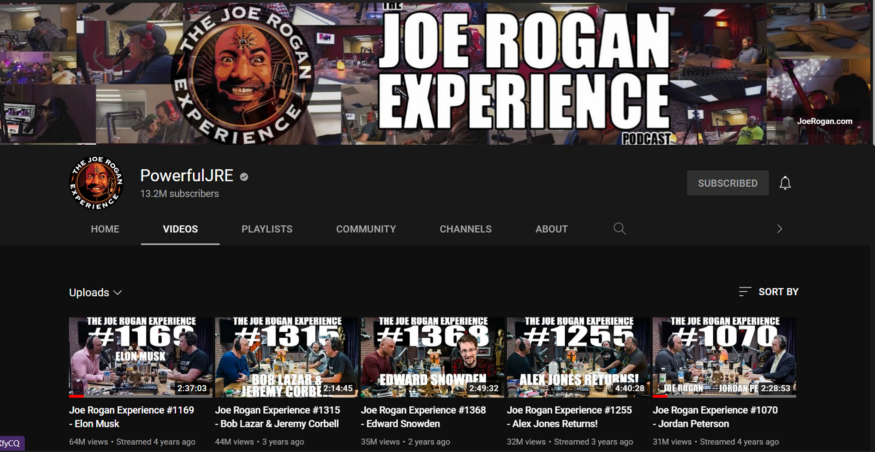
Powerful JRE(Joe Rogan Experience) is one of the most popular podcasts in the world. Hosted by Joe Rogan, a popular UFC commentator, podcaster, comedian, and actor, the podcast’s reach is now worldwide.
Joe’s interviews are highly insightful and extremely intense. His ability to build intense conversations and bring the best out of his guests is the show’s biggest strength.
He also has a wide variety of people in his podcasts — from athletes to entrepreneurs to scientists and writers and so on.
If you’re looking to spend your free time listening to some interesting content, you can listen to this amazing podcast. You will learn a lot of great lessons from a bunch of interesting personalities.
Ali Abdaal is a former doctor turned entrepreneur and also an amazing content creator. What makes him great is that he talks about many proven tactics and real-life practices to improve our daily lives.
His content does not fall under one particular niche. He talks about financial knowledge, self-care, books, gadgets, time management, productivity, and many more.
It’s truly fascinating to see how he manages his time to be an entrepreneur and also a content creator. When you watch his videos you can understand the effort that he puts to compile his videos.
I feel that presentation is one of the most important skills to be successful on youtube. Though you may have great content and great video editing skills, if you don’t know how to present it to the audience, it won’t work.
I can think of a lot of tutorial channels that I hate just because of how they present them.
When it comes to Ali’s channel, his ability to present his content in such an elegant way is a big plus. It makes his content more engaging to his viewers and makes it worth our while.
I would encourage you to subscribe to his channel and learn a lot of valuable things. Here are some of my favorites:
TEDx talks is the by far the most popular channel on my list today. TEDx is an international community that organizes events anywhere and everywhere, inviting various guest speakers to share their ideologies on a global scale.
When it comes to a self-help channel, TEDx just about covers everything. You can find great insights from all kinds of people; from writers to navy seals to philosophers, you got it all in there.
It doesn’t matter what part of your life you want to improve, you will find a video that will help you. I would highly recommend you subscribe to the channel.
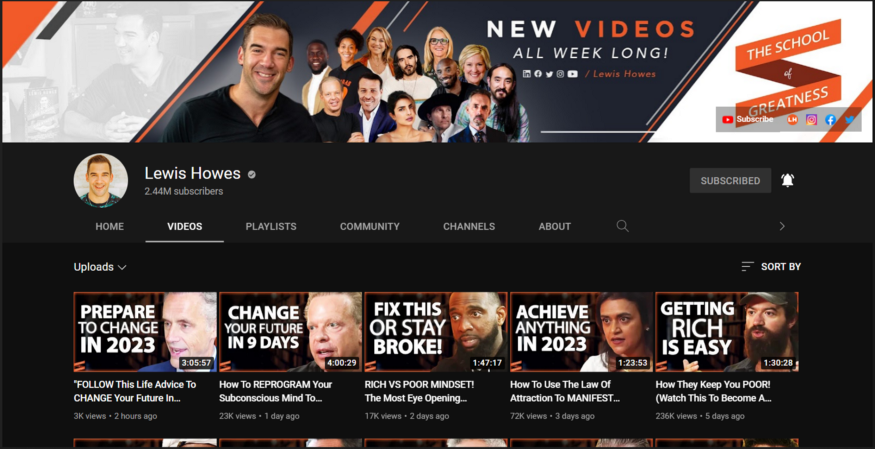
Lewis Howes is a New York Times best-selling author, 2x All-American athlete, keynote speaker, and entrepreneur. In his channel, he shares inspiring interviews with the most successful people on the planet — world-renowned leaders in business, entertainment, sports, science, health, and literature.
Lewis’ podcast is named ‘The School Of Greatness’. And rightly so, he always focuses on greatness and what it takes to reach it. In his interactions with these incredible guests, he solely focuses on their road to greatness.
As I mentioned about the other channels, you get to learn a wide range of things from some incredible achievers. It’s the best thing about listening to these podcasts.
You get to see the world from many perspectives. Above all, you would understand that the great ones are not built differently than the others, but they do certain things differently compared to an ordinary person.
You can go through Lewis’ content and have a look yourself. You will not regret it.
Hope you liked reading this. Thanks for your time! If you like to read more of my content, click the follow button and also show your appreciation for the post through claps and comments.
You can also contact me on Instagram @words_by_ken.
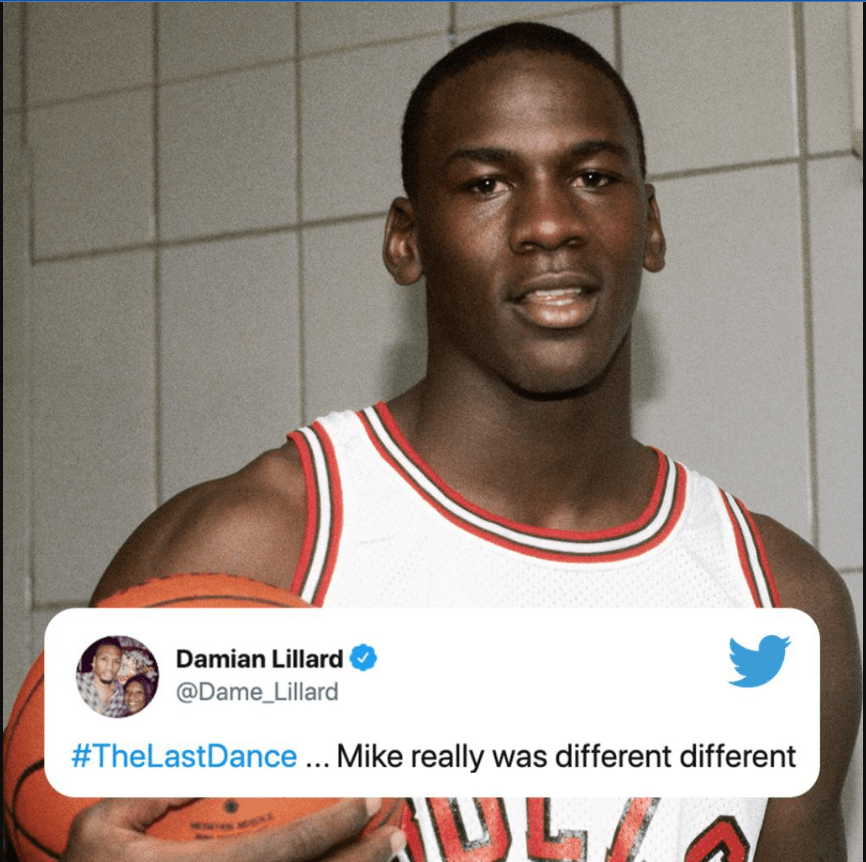
If you didn’t already know about the greatness of Michael Jordan and his legendary Chicago bulls team, the Last Dance would make it pretty clear for you. If I had to describe it in one line, I would say it is every sports fan’s dream documentary.
I’ve always loved getting to know the story behind a successful person’s life. Athletes in particular. How do they handle the pressure, the competition, the constant chit-chat about their lives, the fame, the money, and so on?
I feel like a kid in a candy store when I read stuff like this. I’m always intrigued by how these people reach and stay at a world-class level for so long.
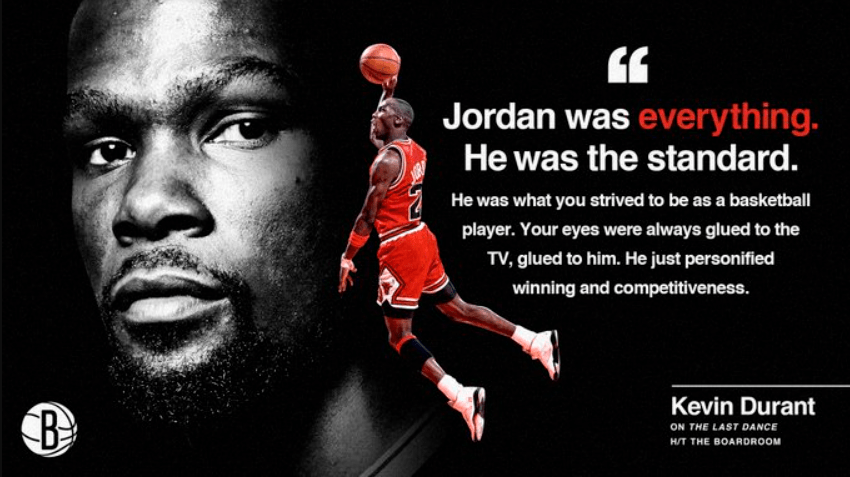
As many of you already know, MJ’s greatness was off the charts. He was a celebrity to celebrities. In sporting terms, he is your favorite player’s favorite player. A man with alienesque features. The greatest to ever step on a court.
What I loved most about the documentary was how raw it was. Nothing was sugar-coated or stretched out more than necessary. Neither did it need anything more or lack anything, it was perfectly balanced.
The documentary was not only about entertainment but it also had a lot of valuable lessons in it.
Here are some of the best lessons I learned from the documentary :
You don’t have to chase money and prestige. Focus on building your value and they will chase you.
Years after his retirement, Michael Jordan is still the most valuable athlete in the world, with a net worth of around 1.7 billion dollars.
When Nike decided to partner up with MJ in the early 80s, they had hoped to generate 3 million dollars in sales over four years. I recently read in an article that the Jordan brand rakes in 3 million dollars every 5 hours today!
So how did he become such a valuable person? And how is he able to still maintain that status to this day?
Michael answers this question perfectly in the documentary.
“If I had averaged 2 points and 3 rebounds a game, I wouldn’t have signed anything with anybody. My game was my biggest endorsement. What I did on the court, and my dedication to the game lead to all this stuff. My game did all the talking.”
Those were not his primary targets though he had all the money and fame. His focus was always on being the best basketball player he can be, and he worked as hard as he can to reach that.
Winning is the only option. You have to do anything to Win.
An interesting fact I learned about MJ was that he wasn’t really a nice guy to be around. You can see it in the documentary and in many of the interviews where people talk about him.
Most of his teammates described him as an ‘asshole’ of a person, and that he had crossed the line numerous times when he would talk things to motivate the group.
Michael’s mentality was simple. He wanted to win at all costs. The hardships that came along the way didn’t really bother him so much because he’d do anything possible to reach the end goal.
As the leader of the team, he wanted his teammates to be with the same mentality as well. And he wasn’t really afraid of making that point straight to your face.
If he finds a teammate that is a little out of the way or nonchalant during practice, he would basically torture him during the sessions and make sure he was on track.
His aura was so intimidating back then that his own teammates were afraid of him. When asked why he answered it in a way that only he can.
“Some people might say, well, he wasn’t really a nice guy. Well, you think like that because you haven’t really won anything” -MJ
That’s it. It’s that simple. He knew how to lead the team to victory, and he wasn’t changing that for anybody.
Another thing I love about Mike was the way he set the example. Not only did he instruct them on what to do, but he also lead from the front.
He talks about this in one of the episodes where he says, “Ask anybody in my team. They would tell you that the one thing about MJ was that he didn’t ask us to do anything that he didn’t fu***** do “
I still remember the time I watched that for the first time. It gave me chills. That’s a real leader right there!
MJ used his dark side as his strength
Michael’s competitive spirit was off the charts. What’s really crazy is that it holds true to this day!
He wanted to compete with people so badly that he even considered that to be a ‘problem’ in a way. When the gambling speculations were going on, he made it clear that he wasn’t addicted to the act of gambling, but the problem for him was that he always wanted to compete at some level.
Whether it was basketball or golf or any activity that people do together, he always wanted the upper hand over the others.
When a person lives with such a mindset it makes it hard for him/her to be liked by people. We wouldn’t normally appreciate someone who always wants to beat us at something and takes everything personally.
What I love about Mike is that he knew how to use that competitive fire inside of him. He knew that it could make him one of a kind.
If you would’ve watched the documentary, you would know that pissing him off might be the worst decision you can make when you are playing against him.
Every word that came out of the opponent’s mouth was motivating for Mike. It was like adding wood to the fire. All you have to do is breathe wrong and he would take that personally and torch you in the game.
Here is a prime example of how crazy he is.
The year was 1993, and the Chicago Bulls hosted the Washington Bullets. Labradford Smith had the best game of his career that night with 37 points in his bag. While MJ on the other hand had a forgettable one.
Apparently, at the end of the game, Smith had tapped Mike on the shoulders and said, “Nice game Mike”. Those 3 words were enough to piss the man off.
They had to play with each other again the next day. Before the game, Mike says to one of his teammates, “In the first half alone, I’m gonna have what he had in the game”.
Guess what happened. He scored 36 points at the end of the first half and went after Labradford Smith the whole game. He humiliated him that night.
There’s still more to this story. It was later revealed that Labradford Smith didn’t really say anything to Mike. He had just made up the story in his head to motivate himself to go after him the next game !!
In a way, he was psychotic. But he knew how to use that as his strength.
Working in a team environment is all about knowing your role and giving your best at it
Every team has one or two ‘alpha-males’ in it. Like how the Lakers had the Magic-Kareem duo and then went on to have the Kobe-Shaq duo, and like how Boston had Larry Bird and so on.
When teams have such dominant people, there tends to be a clash of egos sometimes. Too many people fighting for the ‘best player’ spot, or to take the glory of the game-winning shot is never a good sign.
When it came to the Bulls, they had the alpha of all alphas. It doesn’t get any bigger than Mike.
But the way the team handled that and how well each player knew his role and played accordingly is admirable.
Though they had the best player in the world with them, they understood that he won’t be able to do the job by himself. Each player took the responsibility of doing his job as well as he can.
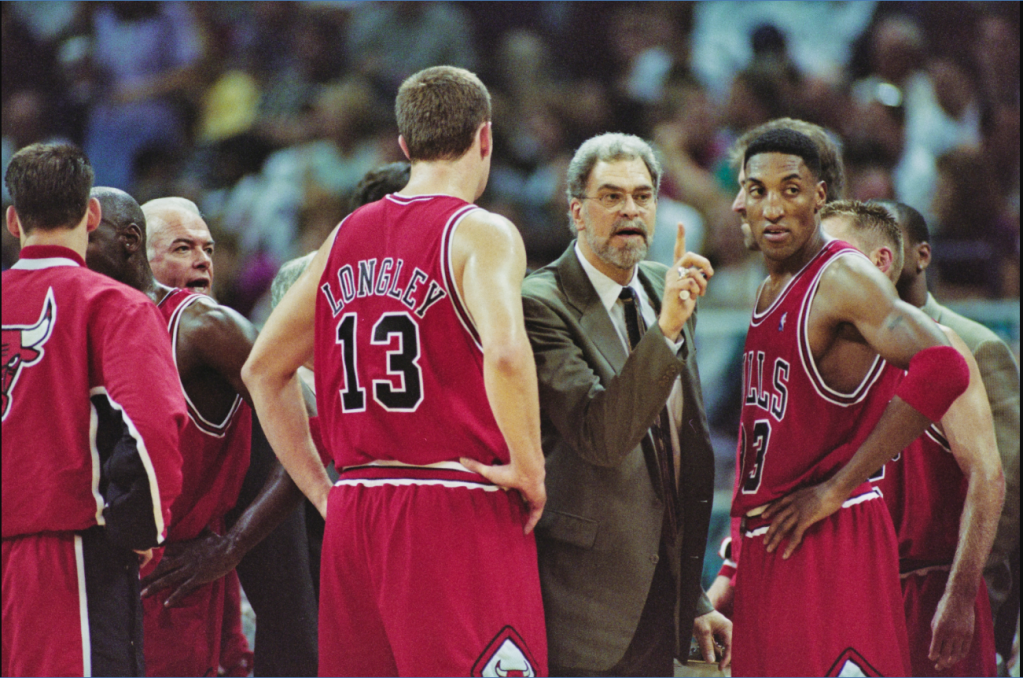
The team wouldn’t be where it is today without Scottie’s energy, Kerr’s clutch shots, Rodman’s rebounds, and of course, Phil Jackson’s basketball IQ.
And when the game was on the line, the ball was going to one person only. As Scottie describes his thoughts during the last minutes of the ’98 finals, the plan was just to ‘get the hell out of the way’ and let MJ do his thing.
And even MJ himself abided by everything that Phil had planned for the games. He had faith in Phil’s ability to put the pieces together. That is how successful teams are made.
If you have already watched the documentary, let me know your favorite moment from it in the comments. And if haven’t watched it yet, I encourage you to do so. Believe me, if you are a true sports fan, you’ll love it.
If I were to ask you to list out the ten most important needs of your life, what would you write down? We all might come up with many different answers, but I’m sure there will be two answers that are common on everyone’s list: one is wealth, and the other is happiness
Money and happiness are two things that never seem enough to us. They are like a never-ending desire in life.
If we could find a way to learn how to lead a wealthy and joyous life, wouldn’t we treat it like a pot of gold? We sure would.
A while back, I had the chance to find a similar treasure.
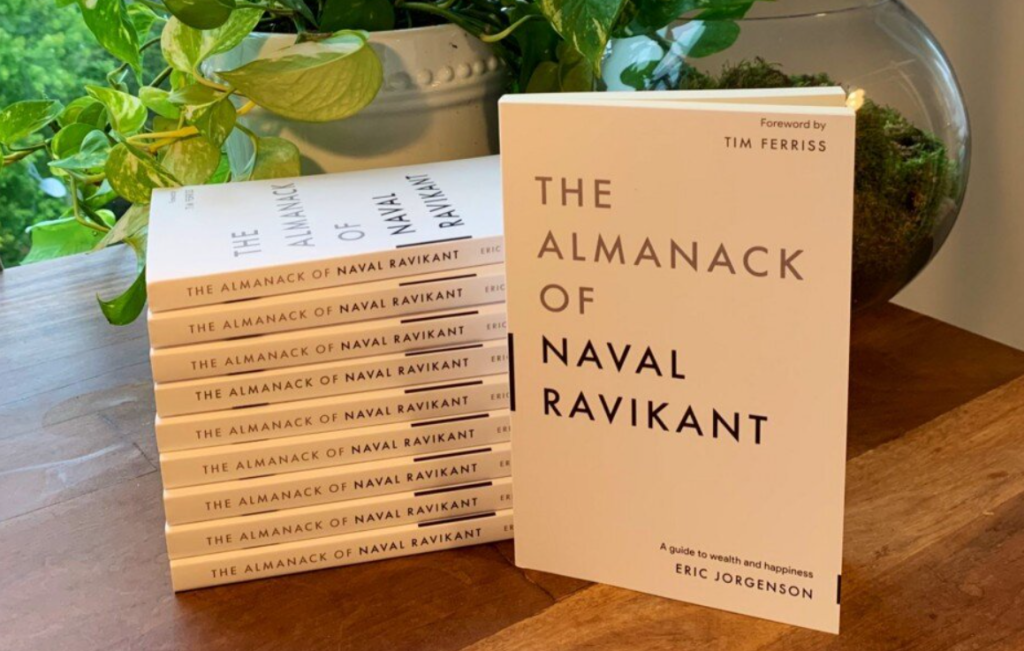
In this post, I’m going to share my thoughts on the book ‘The Almanack of Naval Ravikanth’; your guide to wealth and happiness.
The reason I call this one a pot of gold is in awe of Naval’s perspective on wealth creation and entrepreneurship. It talks about getting rich is not about luck but is a skill that we all can master.
So who is Naval Ravikanth?
Naval is an entrepreneur, philosopher, investor, co-founder, and chairman of AngelList. His philosophies on wealth creation and long-term happiness have captivated the world through the years.
The way I got to know about him was through an interview he did with Joe Rogan back in 2019. I loved every minute of that episode and learned so much from it, and I was automatically intrigued to buy this book
About the book :
This book was not written by Naval himself but was put together by one of his ardent followers, Eric Jorgenson. Jorgenson has made this book entirely out of transcripts, tweets, and talks Naval has shared.
This is a collection of thoughts that Naval has shared through the internet, and in the writer’s own words, is a public service, as all this knowledge is also available as a free download in pdf and e-reader versions.
Part 1 – Wealth
Creating wealth does not have to depend upon luck. It’s a skill that we all can learn and master.
“Getting rich is about knowing what to do, who to do it with, and when to do it. It is much more about understanding than purely hard work.”
One of the most important things that we should be aware of is that wealth and money are different things. The true definition of wealth is having assets that earn for you while you sleep.
Money is how you transfer time and wealth. Money is what you get in exchange for the time that you spend. You can never achieve financial freedom by trading money for time!
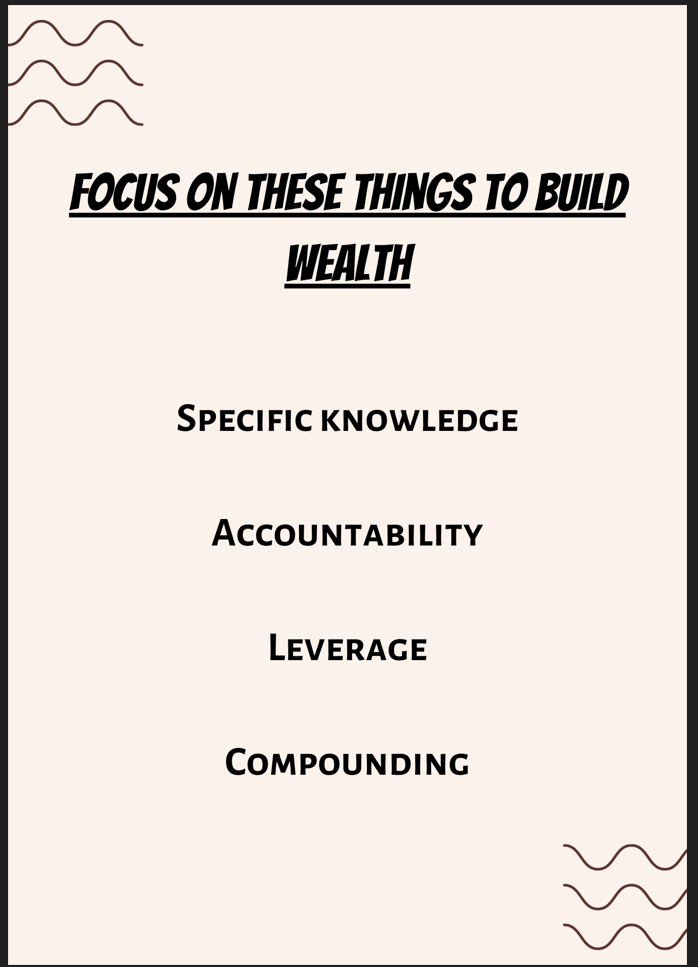
Focus on these things to build wealth
Specific knowledge
Accountability
Leverage
Compounding
-> Specific knowledge is what you were doing almost effortlessly as a kid or a teenager. It’s something you were naturally good at or naturally better than others around you.
-> Examples of specific knowledge: Sales skills, musical talents, an obsessive personality, understanding games easily, etc.
-> It’s all about your genuine curiosity, your innate talents, and your passion.
-> Choose the field where you are naturally good and work on getting better at it. Everyone is the best at something- being themselves. The best way to create an impact is with authenticity.
-> When you are the best in the world at what you do, you automatically attract money. And one way to do that is with authenticity and uniqueness.
If you want to be rich, you have to be a good learner
-> You have to know how to learn anything you want to learn.
-> Expertise in any field requires continuous learning and improvement.
-> It’s very important to be strong with the foundations whenever you’re trying to learn a new skill. Basic arithmetic and numeracy are more important than calculus. You have to be an expert in the foundations of the skill before you try to dive into the deeper subjects.
Compounding
-> Compound interest is a very important concept in wealth creation. In fact, it’s an important concept in almost all aspects of life.
All the returns in life, whether in wealth, relationships, or knowledge, come from compound interest – Naval Ravikanth
Compound interest is a very important concept in wealth creation. In fact, it’s an important concept in almost all aspects of life.
Your reputation among people is a highly valuable asset. You can use the concept of compound interest to improve your reputation as well,
The reason someone has been appointed as the CEO of a public company or is managing billions of dollars is that people trust them. They are trusted because the relationships and reputation they’ve built have compounded.
This is why compounding in business relationships is very important.
When you find the right thing to do when you find the right people to work with, invest deeply. Sticking with it for years is really how you make big returns in your relationships and money.
Accountability
-> With high risks, come high rewards. When the stakes are very high, you have to take accountability for the actions you take.
Embrace accountability and take business risks under your own name. Society will reward you with responsibility, leverage, and equity.
As I mentioned earlier, leverage is very important if you wish to be rich. If you want to get leverage, you need to build credibility. Without accountability, you don’t have credibility.
Accountability also comes with a lot of risks, especially when you are in the public domain. You risk failing in front of people, you risk a great amount of humiliation, and a lot more. But on the other hand, when things go well, you get to take all the credit.
Focus on leverage
The most democratic form of leverage right now is products with no marginal cost of replication. Things like books, media, movies, and code come under this category.
In the modern age, code is the most powerful form of permission-less leverage. All you need is a computer–you don’t need anyone’s permission.
Most of the new generations’ fortune is made through code or media. Look at people like Jeff Bezos, Mark Zuckerberg, Bill Gates, and Steve Jobs. Their wealth is all code-based leverage.
If you have specific knowledge, accountability, and leverage; society has to pay you what you’re worth
Focus on learning skills like coding, writing books, recording podcasts, tweeting, etc.
You can start as a salaried employee, but you have to work your way up to try to get higher leverage, more accountability, and specific knowledge.
This combination over a long period with the magic of compound interest will make you wealthy.
Get paid for your judgment
Naval believes that every person should aspire to be paid for unique knowledge and expertise on certain things.
If you are great at what you do, nobody will care about what inputs you’re giving, all they will care about is the output. People will only look at your judgment and the results it provides.
Imagine a person who has slightly better judgment than the others. They’re right 85% of the time instead of 75. They will be highly paid for their decisions because a 10% better judgment steering a $100 billion ship is very valuable.
This is why CEOs are highly paid. Their judgment is their leverage.
If you love to do it, be authentic, and then figure out how to map that to what society wants. Apply some leverage and put your name on it. You take the risks, but you gain the rewards, have ownership and equity in what you’re doing, and crank it up. – Naval
Part 2 – H A P P I N E S S
The definition of happiness isn’t the same for everybody. The information shared is from Naval’s perspective and is open to interpretation.
Happiness is Learned
Happiness is a very evolving thing. As we move through life learning and experiencing different things our definition of happiness changes.
We can learn to be happy. We can tune our minds to be happy. It has to be treated as a skill. All of this comes with maturity.
Happiness is there when you remove the sense of something missing from your life. It is the state when nothing is missing.
Happiness requires presence
It is very important for us to tune our minds to focus on the present rather than worrying about the past or the future.
Only a small percentage of our brain is focused on the present most time. The remaining is just a collection of unorganized thoughts running riot inside.
Happiness comes from being present in the moment and cherishing the beauty around us. Thoughts about our past and future are just delusions.
Happiness requires peace
Happiness means different things to different people. But ultimately, it’s all about inner peace.
You can have all the materialistic possession and all the success and fame you want. But if you don’t have peace, then what’s the point?
A happy person isn’t someone who’s happy all the time. It’s someone who effortlessly interprets events in such a way that they don’t lose their inner peace – Naval
Every desire is chosen unhappiness
When you have a desire in your heart, it simply means that you won’t be happy until you get what you desire.
Too many desires ruin our happiness.
It’s a fundamental mistake to believe that your happiness exists in an external circumstance. It is a delusion we all suffer from.
Desire is a contract you make with yourself to be unhappy till you get what you want. Try not to have more than one big desire at a time.
Happiness is built by habits
It is very important to know that peace and happiness are skills that can be learned and mastered. They are not something you’re born with.
It’s all trial and error. You try different things, you see what works for you and you stick with it.
Small changes can help you keep your mood more stable. Avoiding alcohol and sugar can help. Spending less time on social media can help. Spending less time on video games can help. It’s all about these small habit changes.
Another small trick to be happy: Tell your friends you’re a happy person. then you will be forced to confirm it. You’ll have a consistency bias.
Meditation and exercise are important habits
Your health should always be your first priority. A healthy life is a happy life.
Exercise is for the body. Meditation is for the mind
There’s nothing like a health problem to turn up the contrast dial for the rest of your life. Prioritizing happiness means prioritizing health. The harder the workout, the easier the day.
Your mind is like an out-of-control mad person. The advantage of meditation is recognizing how out of control your mind is.
Meditation helps our mind to be free of unwanted thoughts and to be present at the moment. One of the keys to a happy life is stillness in the mind. If the brain is like a muscle, you’ll be better off resting it and being at peace.
Meditation is turning off society and listening to yourself
Being able to control your own mood is a superpower. It can be achieved only when our mind is trained and conditioned.
If you loved the information you read here, It’s time for you to purchase the book right away. Whatever I’ve written about here has just scratched the surface. There’s a lot more in this book. It’s a 10/10 all day every day!
Thanks for reading this post today !! Hope you have a great day.
The last time I published a post was on June 3, 2022. It has been a weird feeling to have been away from writing for such a long time. As I write this post right now, I feel like I’m starting from scratch all over again; things seem very different now.
Before I start talking about why I had to take a break and the lessons I learned from the process, let me first tell you about what’s stopping me from writing.
I am a 23-year-old software Engineer working in one of the top service-based companies in the country. Fellow engineers would know that the IT industry has the potential to kill your soul sometimes; especially if you are working under strict superiors.
Over the past few months, I’ve been overwhelmed with more work than usual. Let me be very clear with this. I’m not putting the blame on work here. I know that there are thousands of others who go through the same path and in fact work much harder than I do.
But the truth is, the work environment is still quite new to me, and I don’t think I have adapted to it very well. I’m working on my first project ever, in my first job, and it has only been a few months since I started.
I’m used to having a little fun every day; I love to hang out with my friends, watch some tv shows, write articles, jam with my guitar, etc. But now, all of that has been replaced with work.
You may be thinking, well, nobody works 24 hours a day throughout the week, there can always be time to do something that you are passionate about. Yes, you are correct. But mental exhaustion is a real thing. I may have only worked for 9-10 hours a day on average, but its after-effects last a longer time.
Amidst the truckload of tasks I had to complete and the courses I had to finish, my mind had no room for focusing on my writing. Though these times have been tough, I’ve learned a few valuable lessons too.
Taking a break or relaxing is not a sign of weakness
In the hustle culture that we live in these days, people look at relaxation as a sign of weakness. I can take nothing away from the value of hard work and dedication, but I believe that people should also understand the importance of a peaceful mind.
I always used to worry about my medium page and personal blog being idle. I made a promise to myself a few months back to be more consistent with my writing, but it didn’t go as planned. It was extremely hard for me to accept the fact that I had lost all motivation to write.
But with time, I’ve realized that it’s okay to feel demotivated sometimes. I’ve understood that we can’t rely on motivation all the time. The last few months were merely a test of my discipline, and I have to admit, I failed.
I decided to accept the situation as it is and move on with life. It’s okay, maybe I needed the break. After all, writing is a hobby, it is not what I do for a living, and it’s a no-brainer for me to spend more time on the work that pays my bills.
I’m more focused on my mental peace now. If writing or reading feels like a chore or a self-imposed burden, I’m not gonna do it. Simple.
Focus on what’s the most important thing at the moment
Juggling too many balls at the same time is never a good idea. One of the scariest truths I found out about this is that when you try to focus on too many different things all at once, you might be just wasting your time and making a fool of yourself without even knowing about it.
It makes you feel like you are putting in work, but in reality, you’re just passing time.
In the past few months, I’ve tried learning different technologies, tried learning different skills, tried maintaining different blogs, tried posting different content on social media… and so on. After a certain point, I realized that I wasn’t giving my best at any of those things.
I understood that I have to choose what’s most important, and dedicate all my time and energy to it. When it comes to focusing, it’s always quality over quantity.
If you’ve had such experiences as well, feel free to share them in the comments! Thanks for reading
It is typical human behavior to have crazy aspirations and dreams as we go through our childhood. One of those crazy aspirations that we have is to become an action movie star and save the world from the evil guys.
‘The Terminator‘ is one of the most popular action movie series in the world. I’m pretty sure we’ve all watched that movie and wished we could do all those supernatural stuff ourselves.
In today’s post, I’m going to share some life lessons that I learned from the terminator himself, Arnold Schwarzenegger.
Before we move on to the topic, make sure to comment your favorite movie from the seriesor your favorite Arnold movie in general.
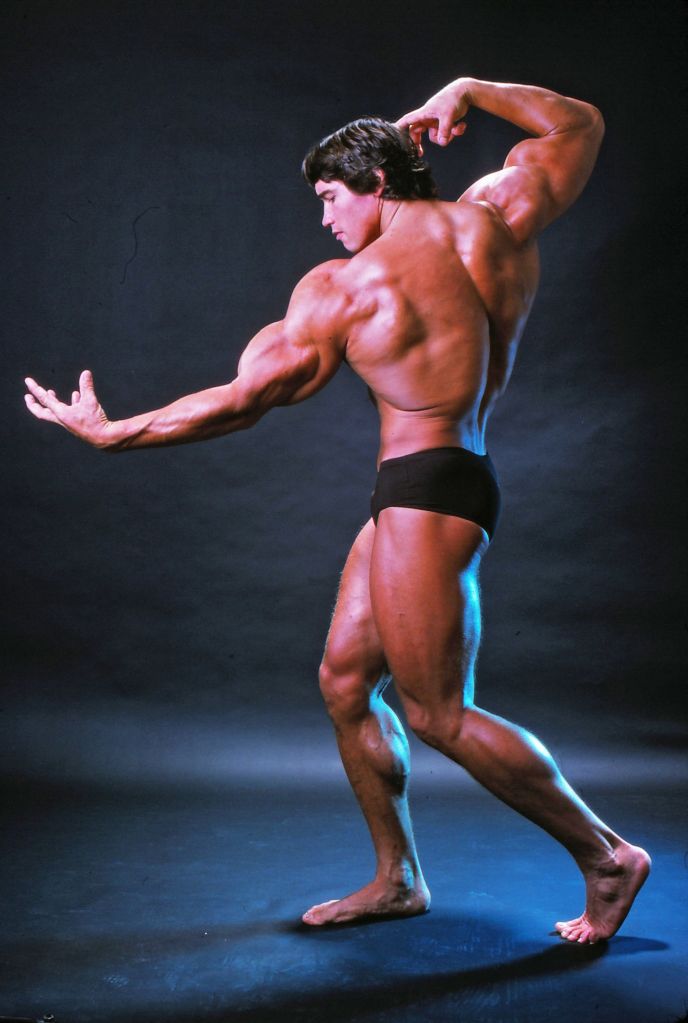
Arnold is one of the most inspirational personalities that I’ve read or heard about. The story of how he came from a poor family in Austria and made it to the pinnacle of success never fails to uplift our spirits.
I’ve been listening to a lot of his motivational talks recently, and I would like to share some of the lessons I’ve learned.
Lesson 1 : Find your vision
Arnold believes that having a clear vision of what he wanted in life was his biggest strength. Hailing from a small town in Austria, his ambitions were so high that even his family members said that they would be impossible to achieve.
Considering the circumstances that he grew up in, not many people would have set high hopes for their lives. Amidst all the odds, he remained steadfast in his pursuit of greatness, because the trials and tribulations couldn’t dampen the flame of his vision.
“Having a goal or a vision is highly necessary; people who don’t have a goal drift around aimlessly and end up nowhere“, he says.
Growing up in a war-ridden country, his first vision was to move to the United States of America. Fascinated by a documentary that he saw in school, he dreamt of moving to a beautiful country like America.
When he began to think about how he was going to get there is when he found his vision for bodybuilding. His inspiration came from a bodybuilding magazine with a picture of the legend Reg Park on its cover.
Similar to Arnold, Park had also come from a poor family and a small town. The article spoke about how hard he had worked and the rewards he reaped because of it. His journey from a small beginning to becoming a mister universe title holder 3 times and starring in multiple movies inspired Arnold to take the same path.
As soon as the vision became clear, there was no stopping him. He dedicated his life to his purpose and began working as hard as he can.
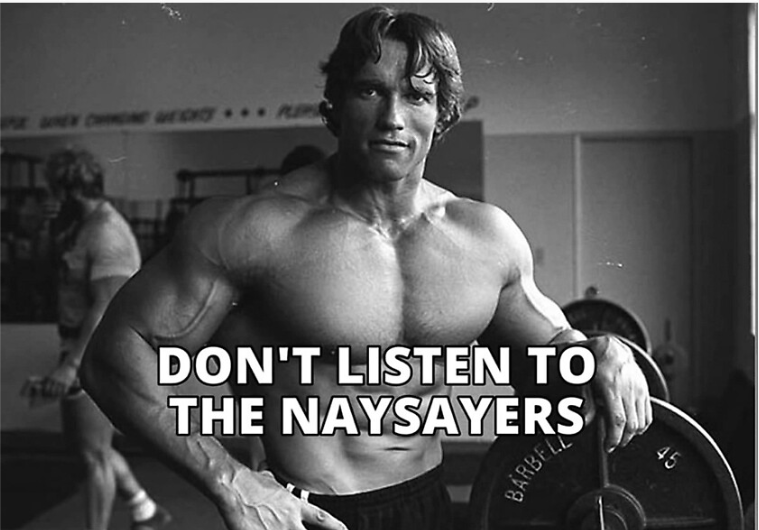
Lesson2 -> Ignore the naysayers
It doesn’t matter who you are or what you do, people will always have something to talk about you. Arnold was no different.
He has had the pleasure of having multiple careers in his life and he says that he has faced criticism and discouragement in all of them.
When he wanted to be a bodybuilder, people said that it would be impossible for someone from Austria to become a successful bodybuilder. When he wanted to be a movie star, people said there was no chance of him being a movie star with that accent of his.
He achieved everything that they said he wouldn’t because he paid no attention to their words. Ignoring the naysayers was one of the best decisions of his life, he says.
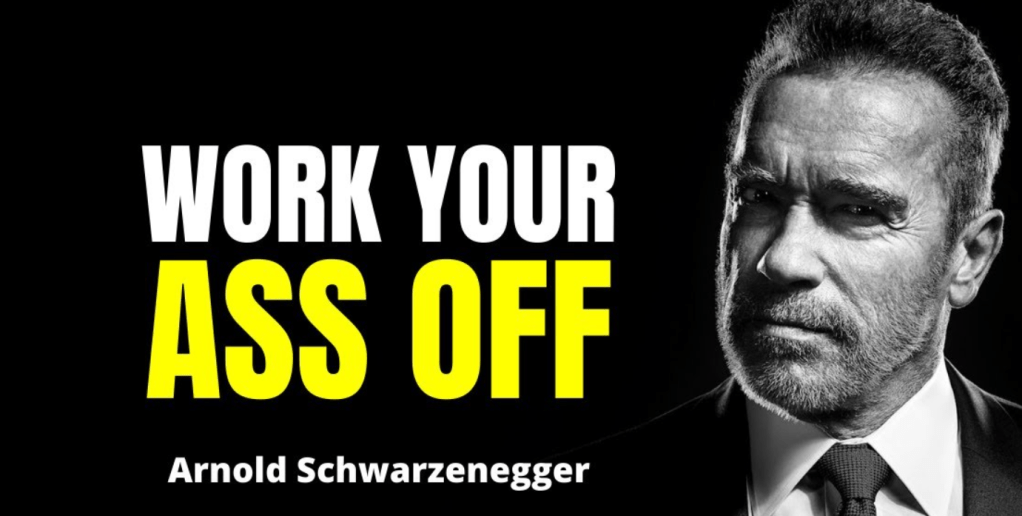
Lesson 3 -> Work your butt off
We’ve heard this from so many successful people and this advice should be imprinted into our brains by now. There is no way around this step when it comes to success. It’s common knowledge.
Arnold says that he had to work 5 hours a day on fitness, work at a construction site, go to college, take acting classes, and do much more to reach the level that he did. With so many things on his schedule, he didn’t have a single minute to waste.
He was immensely successful in whatever he did in life, and it all came by virtue of an incredible work ethic.
Lesson4 -> Don’t just take, give
“Tear down that mirror that makes you always look at yourself, and you will be able to see the many people whom you can help“, he says. If you are in a position to help, never restrain. That’s what God teaches us as well.
Arnold has helped train special Olympians, he started an after school program to the most vulnerable children to get them out of violence and drugs and he has done many more as such.
These are some of the best lessons that I learned from the life of the great man. These are the lessons that we can cherish for a lifetime if we could follow them.
Don’t forget to share your favorite movie of his in the comments. If you would like to read about another personality, you can mention that as well.
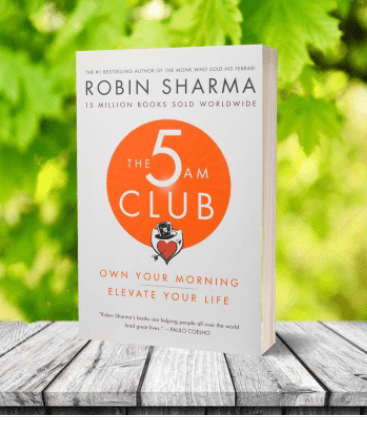
Hello there! Welcome to Words by ken. In this post, I’m going to be doing a full review of ‘THE 5AM CLUB’ by Robin Sharma. If you want to learn about different ways through which you can uplift your life, you will love this post.
This book is based on a concept of waking up early in the morning and following a dedicated morning ritual that will help us lead productive and efficient lives. Let’s dive a little deeper.
This book revolves around the lives of a few people and the impact that they were able to see in their lives through the 5AM concept.
The main characters of the book :
The Entrepreneur
The artist
The Spell-Binder
Mr. Riley
It starts with the story of an entrepreneur who once lead a successful business life but was now struggling with the same. Crushed by the cruelty of life, she was now pushed to a point where she was trying to figure out the best way to end her life.
On the verge of the worst decision in her life, she comes across a strange item on her bed that eventually saved her existence. Her mother had given her a ticket to a personal optimization conference and she had randomly come across that among her things. This conference is where she meets the other three characters.
The spell-binder is the guest speaker at the conference, and the artist was a fellow attendee. As the entrepreneur sat next to the artist, they began their first conversation during the conference. As they were getting to know more about each other, a random stranger joins the conversation. It was Mr. Riley. Though he was an extremely wealthy person, he had a homeless aesthetic and a weird vibe about him which made the two a tad uncomfortable.
*The story of what happens next is extremely long, and I don’t want to bore you with the whole plot. I’ll keep it short and move straight into the key concepts*
After a weird start to the conversation, Mr. Riley revealed that he was a business mogul and had a large amount of wealth to his name. The stories about his life were great, but his appearance made it hard to believe. Being a devout student of the spellbinder, he slowly began to explain the impact that his teachings had on him.
Once they got to know more about each other, Mr. Riley proposed a great idea to the two. He invited them to his private island and offered to teach them all the valuable lessons that he had learned in his life. especially the great morning routine. He offered to take care of all of their needs on this trip and only wanted their whole-hearted co-operation to learn.
*The following are the things that the two people were taught during their visit to the island*
After they moved to his extravagant private island, he revealed to them the magic of the 5AM Club. Here are some of the key aspects :
How do we install the habit of waking up early?
The author talks about a 66-day Habit installation protocol that can help us create and stick with a new habit. This protocol is divided into 3 sections of 22 days each.
STAGE 1 -> Destruction (22 Days)
STAGE 2 -> Installation (22 Days)
STAGE 3 -> Integration (22 Days)
The Destruction stage :
In this stage, we destroy all our old habits and rituals that kept us at a mediocre level.
You need to overcome your deeply ingrained habits, dominant rituals and traditional states of performance.
The installation stage:
Stage two is called installation because it’s like you are going through an interior renovation, of sorts. Former foundations must be torn down so that much better ones can be put up.
This is the stage in which our lives begin to transform.
Stage 2 is also the toughest of them all. But if we persevere, we will witness a massive impact in our life.
The integration stage:
This final stage is where it all comes together. At the end of the 66 days, the routine gets encoded into our brains and it becomes a part of our identity.
These are some of the many points that Mr. Riley taught his guests on the island. And he also added a few more points along with the habit installation protocol :
#1 To make a habit last, never install it alone
#2 The teacher learns the most
#3 When you most feel like quitting is the time you must continue advancing
Rituals run deep when performed in a group. If we have people who can join us on this transformation journey, then the process will be much easier.
when we teach the methodology to others, our own understanding of the material will deepen even more superbly.
Persistency is necessary for all forms of mastery. In the moment you feel you can’t go any further lies an opportunity to forge an entirely new level of willpower.
The 20/20/20 formula:
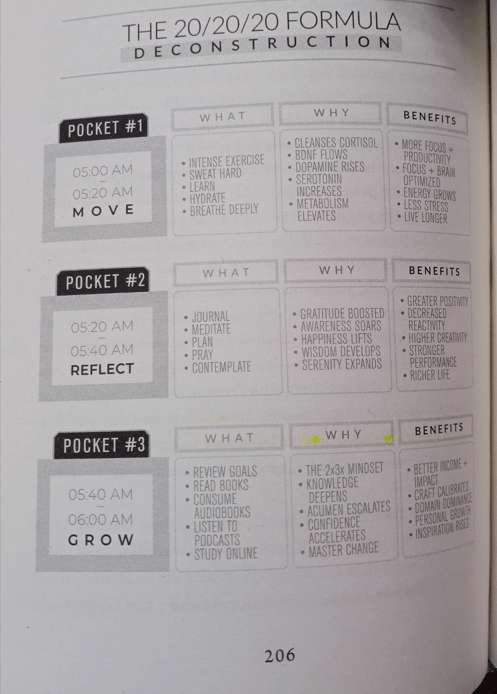
The 20/20/20 formula is an idea in which we divide the first hour of our day into 3 different sections and focus on the three most important aspects of our life – health, mindset, and growth.
The book explains what needs to be done in each of these sections and a brief insight into the benefits of doing them.
Section 1-> 5:00 TO 5:20 AM :
What to do -> Intense exercise, Sweat hard, Breathe deeply
Benefits -> Cleanses cortisol, More focus, and productivity, Dopamine rises
Insight:The best way to start our day is with exercise. Research shows that there is nothing better to improve our focus and energy than sweating it out in the morning. Doing an exercise first thing in the morning will generate an alchemy in your brain – which will electrify your focus and energy which in turn will keep you motivated throughout the day.
In scientific terms:
Scientific data suggests that our cortisol levels are highest in the morning. If you didn’t know it earlier, cortisol is the hormone of fear. This hormone can also be responsible for lowering our motivation levels.
Starting our day with a 20-minute exercise can significantly lower our cortisol levels and dial us into our top performance.
The kind of exercise that we do doesn’t matter. The key here is to make sure we sweat in the process. The sweating from a powerful workout releases BDNF – Brain-derived neurotrophic factor – which supercharges that organ for a successful day.
*All the scientific terms that I use here are from the book itself. Please do some research if you want to learn more*
Section 2 -> 5:20 to 5:40AM :
What to do -> Write a journal, meditate, pray, contemplate, plan.
Insight -> One of the most important elements of a morning routine is a period of deep peace. That is what these 20 minutes are for. Mr. Riley stated a beautiful quote, saying, “Tranquility is the new luxury of our society”. This period of time is to keep our mind calm and free from disturbance.
During this segment, we have to savor some time on stillness, think about the morals and intentions that we want to live by, and figure out ways to make the day great. Plan the most important things that you want to do and figure out exactly how you want your day to be.
Reflection is the main source of transformation because once you know better, you definitely can do better – MR. Riley
Section 3 -> 5:40 to 6:00AM :
what to do ->Review goals, read books, consume audiobooks, study online
Insight: The third section focuses on our daily growth. Mr. Riley taught them another formula – The 2 X 3 mindset. To double your impact and income, triple your investment in two areas, your personal mastery, and your professional capability.
So, the final section of the victory hour is to deepen your base of knowledge, increase your acumen, improve your expertise and outlearn your competition.
Moving on to the next topic, the billionaire teaches us 10 new strategies to lead a successful life.
The 10 tactics of lifelong genius:
Tactic 1 -> The tight bubble of total focus :
The tight bubble of total focus is a small circle that surrounds the most important aspects of our life – mental focus, physical energy, personal willpower, original talent, and daily time.
This strategy preserves our focus as well as our primal brilliance by giving us long stretches of time free from trivial fascinations.
The idea here is to be in a zone in which you are away from all the things that don’t matter to your personal growth. Anything negative or toxic cannot enter the bubble.
for example, avoiding television for a few days, avoiding social media, cutting out time spent with energy-draining people, etc.
Tactic 2 -> The 90/90/1 Rule :
For the next 90 days, schedule yourself to invest the first ninety minutes of your workday on the one activity that, when completed at world-class, will cause you to own your field.
This 90-minute period must be without any distractions or interruptions.
Tactic 3 -> The 60/10 Method:
Work at your best for 60 minutes and rest for 10 minutes.
The most successful people in the world work in oscillations, meaning, they work in specific periods.
Spend 60 minutes with no distractions, in your tight bubble of focus, and then take small breaks. Then the cycle repeats again.
Tactic 4 -> The Daily 5 Concept:
At the start of your day, set 5 targets that you will like to complete in the day. The idea is to complete tasks that would make you feel like the day was well spent.
Small daily achievements, when done consistently, lead to stunning results.
Tactic 5 -> The Second Window Workout:
As mentioned earlier in the 20/20/20 formula, the author believes that working out is very essential to personal growth. He mentions the same point here again.
Schedule a second workout at the end of your workday. One of the best options is to go for a one-hour nature walk. You’ll gain another period of time free from digital distraction.
Tactic 6 -> The 2 Massage Protocol (2MP):
This is another tip to reduce stress. Lock two ninety-minute massages onto your weekly schedule.
Massages are one of the best stress relievers in the world. Living in stress-free environments helps us live a long life.
Tactic 7 -> Traffic University
An average person spends approximately 1200 days of their lives traveling. That’s over 3 years spent in traffic or on a bus or train.
The author asks us to make good use of this time rather than staring at our phones and tablets.
for example, listening to podcasts, consuming audiobooks, learning online courses, etc. The key is not to waste any time in our lives.
Tactic 8 -> The Dream Team Technique:
Successful people often have a great team around them. The author teaches us the importance of having the right people around us all the time.
This could include a fitness trainer who works with you regularly, a nutritionist, a massage therapist, a financial coach etc.
Tactic 9 -> The Weekly Design System:
Create a blueprint for a beautiful week. Spend some time early on a week and write down all the things that you plan to do in the week. Planning your week is a very important habit.
Write down all the things that you learned in the past week, and focus on all the lessons you learned and the areas you need to focus on. Doing this weekly will build extraordinary focus into your lives.
Tactic 10 -> The 60 Minute Student:
The greatest achievers of this world are often great learners. They spend their whole lives trying to learn new things and get better. The key is to be a lifetime learner.
Spend at least 60 minutes every day learning and studying. Read books, watch skill-building videos, enroll in online programs, etc.
The author then goes on to talk about a few more topics as well. But most of that content is repetitive and dragged out longer than needed.
My thoughts on the book:
The problem that I have with this book is that it is filled with tons of unnecessary stories and motivational quotes which made me cringe as a reader. Looking at the content of this book, I feel like it should have been much shorter or must’ve just been a blog post instead. I’m not sure about what others feel, but the style of writing was not it for me. I wrote a post about this book before and I stated that this is truly just a collection of motivational quotes and life stories.
I usually love reading motivational stories, but in the context of this book, most of it was completely unnecessary. It soon made me lose interest as a reader and I was just skimming the pages during the last few chapters. No offense to the writer though. I’ve heard a lot about him and his success as an author, but this book wasn’t very appealing.
Anyways, I wouldn’t stop anyone from reading this book. You may have different preferences and you may love this. So do try reading this book if want. Here is the link to it -> *clickhere*
Pros :
Great attention to detail in the lessons mentioned
Have you ever wondered why we spent so many years in school trying to learn mathematical equations that are of no use now? I still can’t figure out why I knew more about wars that had happened hundreds of years ago than knowing how to find my passion and make a career out of it. If you are a fellow Indian, I’m sure that you would have questioned the educational system at some point in your life.
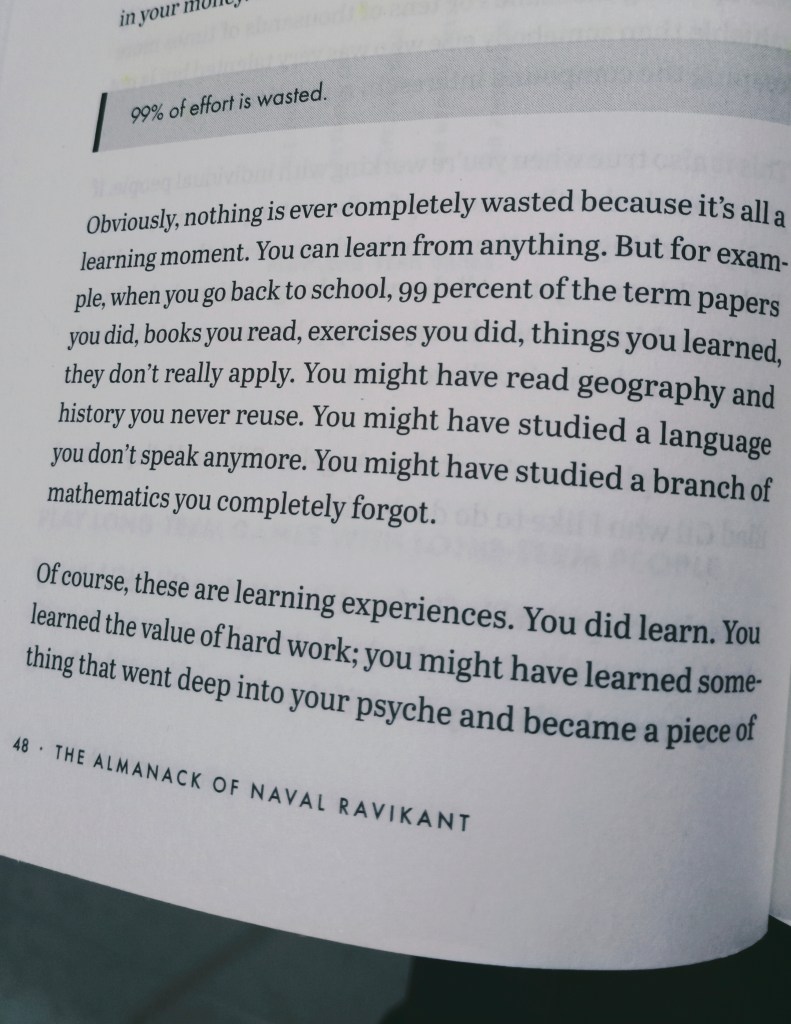
Let me explain why I’m bringing up this topic now. I was reading ‘The Almanack of Naval Ravikant’ yesterday, and I read an interesting statement in the book and it got me thinking.
Naval tells us that about 99% of our effort is wasted at some point. Most of the subjects we learned, tests we took, the practical examinations we were a part of, none of that makes any sense now. Does that mean we wasted our precious time? Not exactly.
As he states on the same page, some lessons are valuable, for example, the value of hard work. But the point that he is trying to make here is that we should know the value of the things that we are investing our time on. It doesn’t mean that we shouldn’t do the work, because it is very hard to identify what has value.
In another example, he talks about how people date many others before they meet the love of their lives. Was dating the person waste of time? Maybe in the goal sense, it was, but not in the exponential sense or the learning sense. You learn more about handling relationships and leading a balanced life from all the past relationships that you’ve had and the mistakes you’ve done.
What I’m saying is: when you find that 1 percent of your discipline which will not be wasted, which you will be able to invest in for the rest of your life and has meaning to you- go all in and forget about the rest. – Naval Ravikant
Before he came to this theory, the book talks about the importance of compounding. The process in which small and consistent efforts add up and yield tenfold results. He says that when you find the element that belongs in the 1 %, go all in and work consistently so that the rewards you reap would be satisfying.
It doesn’t matter if the history and geography books were worth the time or not, at this point of your life, remove and refrain from anything that doesn’t provide value. Give your 100% to the things that matter.
Over the past couple of years, I’ve been intrigued by the science and benefits of waking up early in the morning. Wanting to learn more about that, I picked up a book called ‘The 5 am club’ by Robin Sharma. Amidst a bunch of books that talk about the same topic, I chose this one because of the hype that the book and the author have among readers. I have read about 70% of the book now, and in my honest opinion, I’m not a fan.
I have planned to share the full review of the book later, so I don’t want to focus much on the drawbacks of the book in this post. Instead, I would like to share some of the best motivational quotes from this book. The reason I called this a motivational book in the title is that a big part of this book is filled with inspiring quotes from various people around the world. Though this book is dragged longer than necessary, there are some good quotes that we can follow. Here are some of my favorites :
Ideas are worth nothing unless backed up by application. The smallest of implementations is always worth more than the grandest of intentions.
This particular quote has helped me a lot in my personal life. I realized that I’ve wasted a lot of my time simply thinking about different ideas and not executing any of them. Sometimes I overthink my way into irritation and end up getting no work done. Through the years, I’ve understood that doing a little work is far better than doing nothing, meaning, that even a small amount of work we do every day can help us big-time in the future.
If you think your life is a mess right now, this is simply because your fears are a little stronger than your faith
Let me quote you a line from a poem I wrote last year,
“When joy preponderates over sorrow. and faith over fear,
We have hope for a better tomorrow, and a brighter path will appear“
From a very young age, I’ve been taught about the importance of having faith in difficult situations, and trust me, it does wonders. I graduated from college in April 2021 and I had to wait till December to get my first job. During those 8 months, I applied for various jobs and worked very hard every single day. And despite all that I didn’t get the job I wanted. The only thing that kept me strong was the faith that I have in God. Months later, God gave me a job which is much better than what I had hoped for and things worked out better than I ever imagined. This is one of the many testimonies that I have in my life. You can trust me on this, faith works wonders!
I’ve had dreams and I’ve had nightmares, but I have conquered my nightmares because of my dreams
I had chills when I heard this quote for the first time. What a powerful line! The darkness of our struggles cannot overcome the light of our vision. One of the common things I’ve noticed in successful people is they all work toward a vision or a dream, and throughout the ups and downs of life, they always find motivation in them. It is very important for us to have a vision for ourselves.
Health is the crown on the good person’s head that only the ill can see
We don’t appreciate the little things in life until we’ve lost them. Only a person who doesn’t have the things that we have will understand and appreciate them. It is very important for us to have a heart filled with gratitude for every good thing that we have in our lives.
“Gratitude is a powerful catalyst for happiness. It’s the spark that lights a fire of joy in your soul.” — Amy Collette









 Wordsbykenaniah